
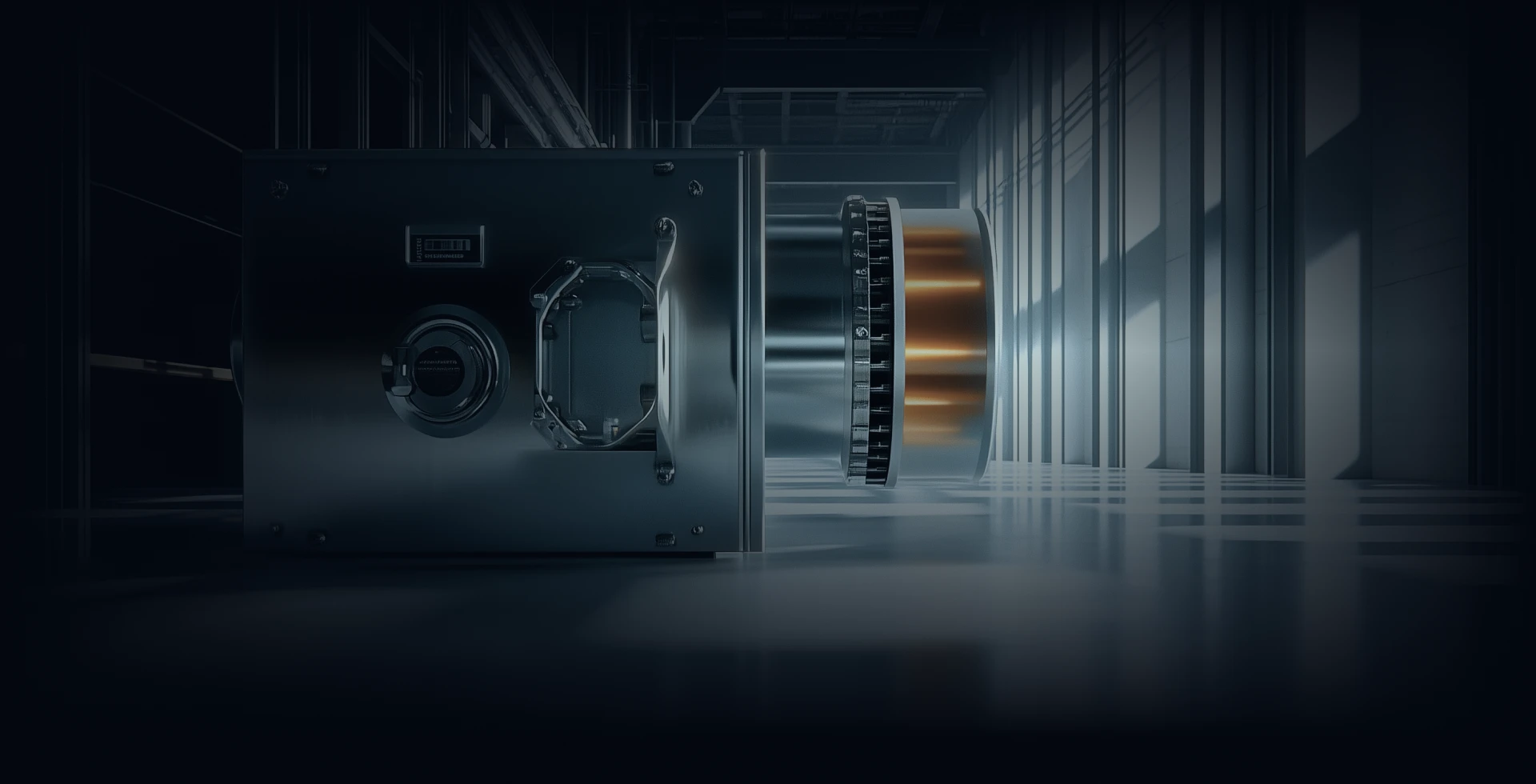

Two-Phase System Features
Phasic two-phase heat exchangers are engineered for applications involving phase change -- condensation or evaporation of refrigerants and working fluids. Two-phase heat transfer delivers the highest heat transfer coefficients of any cooling mechanism, enabling exceptional thermal performance in compact packages for condenser units, evaporators, and advanced cooling systems.

Exceptional Heat Transfer Coefficients
Phase-change heat transfer delivers coefficients far exceeding single-phase liquid or air cooling, enabling maximum thermal performance per unit area.

Condenser Models
ML-driven condensation HTC prediction (v0.7.0, 3.8% MAPE) across 6 refrigerants and compact channel geometries (Dh 0.5-3.0mm). Optimized for thin liquid films and minimal thermal resistance.

Evaporator Models
CFD-trained evaporation HTC + pressure drop prediction (v0.8.0, 3.3% MAPE) for compact channels (Dh 0.2-0.45mm). Includes surface enhancement correction for AM surface finish effects.

Wide Operating Range
Designed for diverse refrigerants and working fluids across a broad range of saturation temperatures and pressures. Condensation supports 6 refrigerants; evaporation currently covers R1234ze(E).
Get a Performance Estimate
Enter your operating conditions for an instant preliminary assessment.
Two-Phase Applications

Two-Phase Applications
Condenser Units for CDUs

Two-phase condensers that reject heat from refrigerant loops to facility cooling water, forming the core of advanced CDU architectures for high-density data center cooling.
Evaporator Systems
Compact evaporators for direct cooling applications where refrigerant phase change absorbs heat at the source, delivering the highest possible cooling density.
Defense and Aerospace Cooling
Two-phase heat exchangers for space-constrained defense platforms where maximum heat rejection in minimum volume is mission-critical.